Log at the moment of spending
Enter it as you pay, before you have put your phone away. Three seconds now beats trying to remember it tonight.
Guide · Everyday use
Updated August 12, 2026 · Simply Finance
Almost everything Simply Finance can tell you rests on one small habit: logging what you spend as you spend it. Get that habit and the recurring bills tracked, and the forward-looking numbers take care of themselves. Here is how to make logging effortless and keep your subscriptions on a leash.
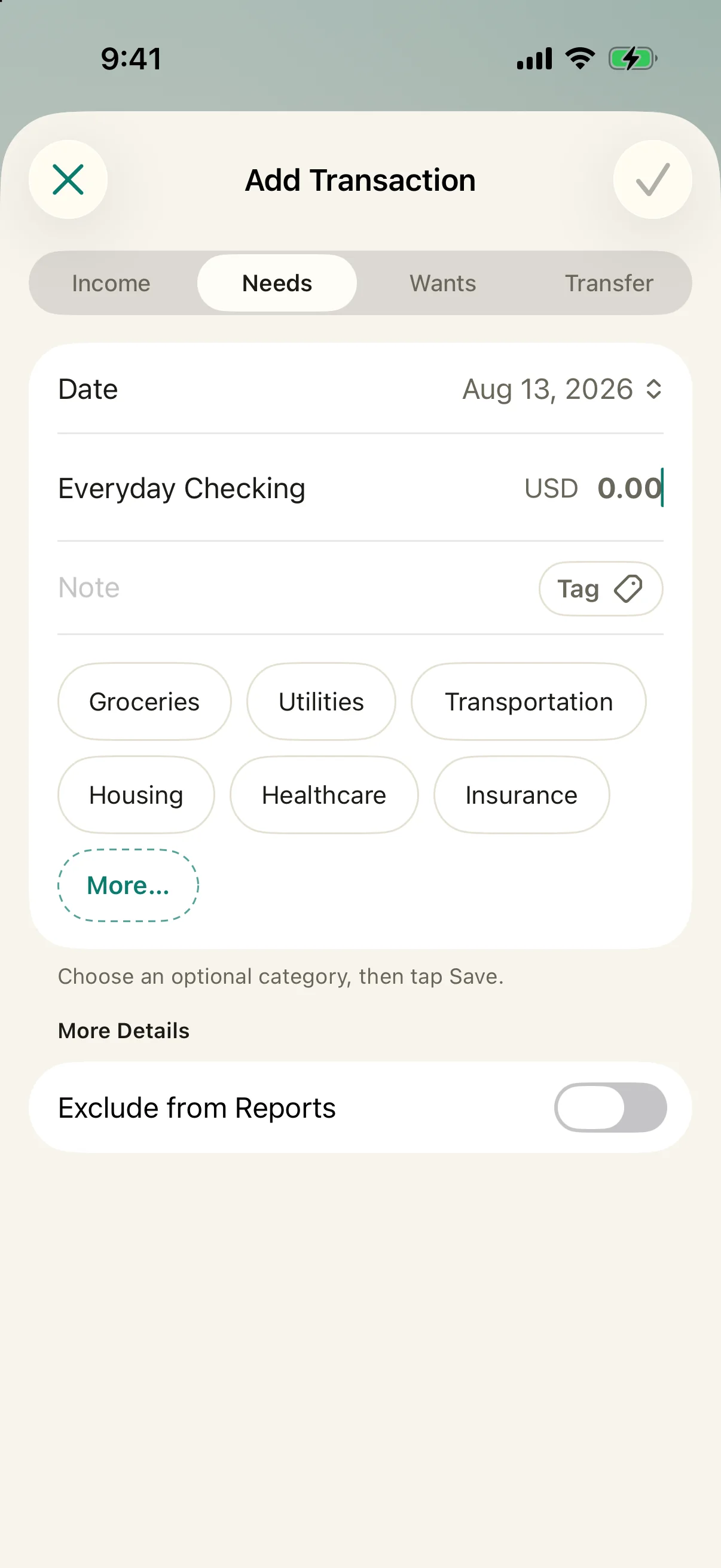
This is the one move the whole app is built around, and it is short: tap to add a transaction, type the amount, pick a category, and save. There is no merchant lookup to wait on and no field you are required to fill.
Because nothing is pulled from a bank feed, there is nothing to reconcile afterward. What you enter is the record — no pending charge that changes tomorrow, no duplicate to merge, no guess about which category an import belongs to. You logged it, so you know it is right.
The trick is not discipline, it is timing. Log in the small moment you already have — while the card is still in your hand — and it never becomes a chore you have to catch up on.
Enter it as you pay, before you have put your phone away. Three seconds now beats trying to remember it tonight.
Glance at your runway once a day. Seeing the number respond to what you logged is what makes the habit stick.
Miss a few? Add them whenever you remember. There is no feed to fall out of sync with and no penalty for a gap.
Some spending does not need logging every time because it repeats on a schedule: rent, utilities, streaming, memberships, that app you subscribed to once. Add these as recurring bills and Simply Finance keeps them on a list and reminds you before each one is due.
When a bill comes around you confirm it with a tap if it landed, or skip it if it did not — so the record stays honest without guessing on your behalf. Recurring bills also feed into your forward-looking numbers, which is what makes those projections worth trusting.
There is a quieter benefit, too. Writing your subscriptions down in one place is the fastest way to find the one you meant to cancel months ago and have been paying for ever since.
Recurring bills shape your Financial Runway and Future Sight — the guide covers what drives each number.
It is fair to ask why an app in 2026 would have you type spending in by hand. The short answer is that automatic feeds trade one small cost for several larger ones. Feeds break and go silent for days. They double-post the same charge. They guess a category and guess it wrong, and you end up cleaning up an import instead of understanding your money.
Manual entry has none of that. There is no broken connection to troubleshoot, no duplicate to reconcile, and no miscategorized import to fix. But the real reason is simpler: you notice your spending because you are the one entering it. That small moment of awareness is the point of the manual workflow.
Logging a transaction takes three short steps: enter an amount, choose a category, and save. The small friction is deliberate because entering it yourself makes the spending visible in the moment.
Nothing breaks. Add the transactions whenever you remember — there is no bank feed to fall out of sync with and no penalty for a gap. Catching up is just a few quick entries.
Yes. Import transaction history from Copilot, YNAB, Monarch, Mint, Simply Finance, or a compatible CSV. A read-only preview shows what will be added and which duplicates will be skipped before you confirm.
No — you confirm or skip each recurring bill with a tap. The app reminds you before one is due and you decide whether it landed, so the record stays accurate instead of assuming a charge happened.